Geometry First, Mods Second: Why Alignment Is the Upgrade You Keep Skipping

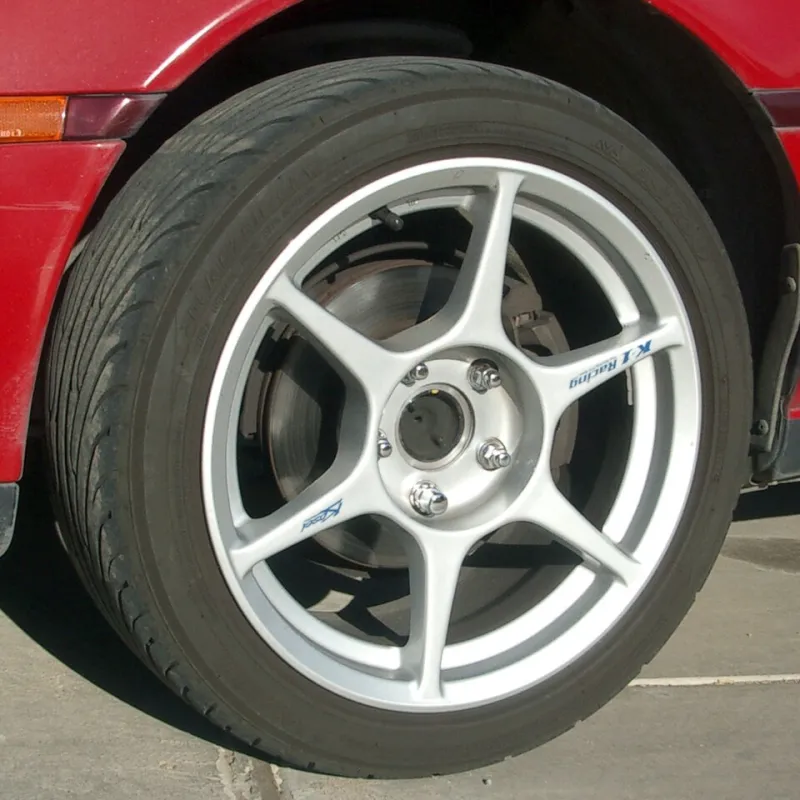
Photo: Ensign John Gay, U.S. Navy, Public domain, via Wikimedia Commons
Let's say you've dropped four grand on a set of name-brand coilovers. Another fifteen hundred on a front and rear sway bar kit. You've got quality rubber on all four corners, fresh brake pads, and a tune that's making solid numbers on the dyno. You take it out to your favorite back road and... it still pushes through corners like a minivan. The front end washes wide. You're scrubbing speed. You're fighting the wheel.
Welcome to the understeer epidemic — and your parts budget had nothing to do with causing it.
The Real Foundation of a Handling Build
Suspension geometry isn't a single number or a single adjustment. It's the relationship between four key parameters — camber, toe, caster, and ride height — and how they interact with each other under load, during cornering, and across different road surfaces. When those relationships are dialed in, your car communicates with the road. When they're off, every upgrade you've bolted on is fighting against itself.
Most enthusiasts understand camber at a surface level. Negative camber tilts the top of the tire inward, which helps keep the contact patch flatter against the pavement during cornering. But slap on a set of coilovers and drop your car two inches without running an alignment, and you might end up with so much negative camber at rest that your tires are barely touching the road on the outside edge during a straight line. You've turned a performance upgrade into a liability.
Toe — the angle at which your tires point relative to each other when viewed from above — is just as critical and even more frequently ignored. Too much toe-out up front and your car will feel nervous and darty on the highway. Too much toe-in and you'll scrub speed through every corner. The right spec depends on your driving style, your tire compound, and what you've done to the rest of the suspension. There's no universal answer, which is exactly why a generic factory alignment isn't good enough once you start modifying.
Caster: The Forgotten Variable
If camber and toe are the geometry specs that enthusiasts at least know the names of, caster is the one that gets completely glossed over in most build threads. Caster is the angle of your steering axis when viewed from the side of the car — essentially how far forward or rearward your front suspension pivot points are relative to the contact patch.
More positive caster increases straight-line stability and gives you better steering return-to-center feel. It also helps your camber curve work correctly through suspension travel, which means your tires stay better planted as the suspension compresses in a corner. Lower your car significantly and you're almost certainly affecting your caster angle in ways the factory never intended. And if you've added aftermarket control arms or camber plates without thinking about caster, you may have solved one geometry problem while creating another.
This is why a competent alignment shop — one that actually knows how to work with modified cars — is worth its weight in dyno time.
Ride Height Changes Everything Downstream
Here's the thing about lowering your car: it doesn't just change how it looks. It changes the entire three-dimensional geometry of your suspension system. Control arm angles shift. Tie rod angles change. Your roll center moves. Your scrub radius adjusts. The factory engineers spent thousands of hours optimizing those relationships for the stock ride height, and the moment you deviate from it, you're operating outside the design envelope.
That doesn't mean lowering is bad — it's often a genuine handling improvement when done correctly. But "done correctly" means understanding what changes downstream and compensating for it. Adjustable control arms, eccentric bolts, camber plates — these aren't luxury upgrades for obsessive builds. They're the tools that let you actually recover the geometry you paid for when you bought those coilovers.
If you're running a slammed street car on fixed geometry and wondering why it understeers like it's on ice in the rain, now you know.
What a Proper Alignment Actually Looks Like
A factory alignment spec is designed for a stock vehicle, driven by an average person, on public roads, prioritizing tire wear and predictable handling for the general population. That's fine if you're driving a stock vehicle. But the moment you've modified your suspension — coilovers, springs, sway bars, lowering links, anything — you need a performance alignment that's dialed for your actual setup.
For most performance street builds, that means running slightly more negative camber up front than stock (typically in the -1.0 to -1.5 degree range depending on the application), a small amount of toe-in at the rear for stability, and close to neutral toe up front unless you're optimizing for autocross. Your caster should be as close to maximum as your setup allows.
For track-focused builds, those numbers shift further — more negative camber, more aggressive toe settings — but the point is the same: the numbers should be intentional, not accidental.
And critically, alignment needs to be checked every time you make a significant suspension change. Not once after the build is done. Every time.
Stop Blaming the Parts
The frustrating truth is that a lot of enthusiasts have genuinely good components on their cars that are being completely wasted by bad geometry. Your coilovers can't fix a toe problem. Your sway bars can't compensate for zero caster. Your sticky tires can't overcome a contact patch that's being loaded all wrong through a corner.
Before you spend another dollar on suspension hardware, get your car on an alignment rack at a shop that understands performance setups. Bring your specs, know your goals, and have an honest conversation about what your geometry is actually doing right now. It might be the most valuable two hours — and two hundred dollars — in your entire build.
Because the best mod you can make to a car that understeers is usually not a bigger sway bar. It's fixing what's already there.