Wheel Fitment Deep Dive: The Numbers You Have to Get Right Before You Buy a Single Bolt-On
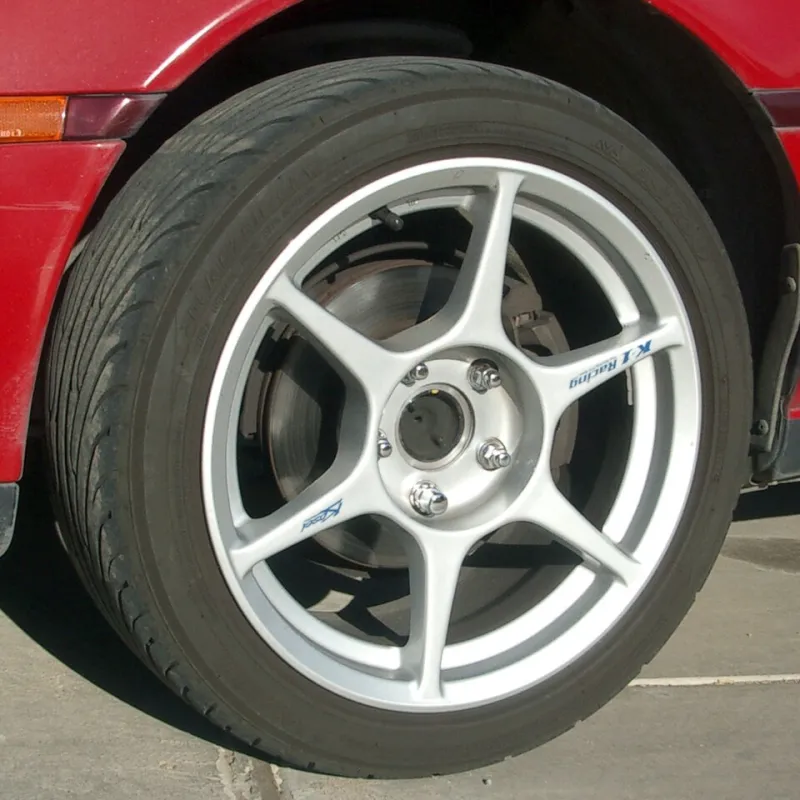
Photo: No machine-readable author provided. Milkmandan~commonswiki assumed (based on copyright claims)., CC BY-SA 3.0, via Wikimedia Commons
New wheels are one of the first mods most enthusiasts make — and honestly, one of the most misunderstood. Pick the right setup and your car looks sharper, handles better, and feels more planted. Pick the wrong one and you're rubbing fenders on every hard turn, wearing out wheel bearings in 15,000 miles, or dealing with steering that wanders all over the highway.
The difference between those two outcomes isn't luck. It's fitment — and fitment is a numbers game.
Why "Will It Fit?" Is the Wrong Question
Most people approach wheel shopping by asking whether a given size will physically clear the fender. That's the bare minimum. The better question is whether the wheel fits correctly — meaning it maintains proper suspension geometry, doesn't stress the hub and bearing beyond their design limits, and actually delivers the handling improvement you're paying for.
A wheel can technically clear every obstacle on your car and still be the wrong choice. Understanding why requires getting comfortable with a few key measurements.
Offset: The Number That Changes Everything
Offset is the distance, in millimeters, between the wheel's mounting face (where it contacts the hub) and the wheel's true centerline. It's expressed as ET (from the German Einpresstiefe, which just means "insertion depth") followed by a number.
- Positive offset means the mounting face is toward the outside of the wheel. The wheel sits tucked inward toward the engine bay. Most modern front-wheel-drive and all-wheel-drive cars run high positive offsets — think ET45 to ET55.
- Zero offset means the mounting face is exactly at centerline.
- Negative offset means the mounting face is toward the inside. The wheel pushes outward, giving you that aggressive, wide stance look. Common on older RWD platforms and purpose-built track cars.
Changing offset — even by 10mm — shifts the scrub radius of your suspension. Scrub radius is the distance between where your tire contacts the pavement and where your steering axis intersects the ground. Change it too much and you introduce torque steer on front-wheel-drive cars, vague steering feel on rear-wheel-drive platforms, and added stress on every steering and suspension component that touches the knuckle.
A good rule of thumb for street-driven cars: stay within 15–20mm of your OEM offset spec unless you're making corresponding suspension geometry changes.
Backspacing: Offset's Less-Talked-About Twin
Backspacing is the physical measurement from the back face of the wheel to the mounting face, measured in inches (yes, it's a mix of metric and imperial — welcome to American car culture). It tells you how much of the wheel sits inside the fender well.
Low backspacing pushes the wheel outward. High backspacing pulls it inward. This matters enormously for brake caliper clearance — a wide-body caliper from a big brake kit can make a previously fitment-perfect wheel suddenly impossible to run. Always measure your caliper depth before ordering.
You can convert between offset and backspacing using a simple formula:
Backspacing (inches) = ((Width in inches / 2) + (Offset in mm / 25.4))
Or use one of the many free online fitment calculators — Wheel Offset Calculator and Fitment Industries both have solid tools that visualize the change relative to your OEM setup.
Diameter and Width: More Than Just Aesthetics
Going wider opens up your tire contact patch, which is great for grip. But a wheel that's too wide for your tire causes the sidewall to bow inward (negative stretch) or outward (positive stretch), both of which affect handling in ways the manufacturer didn't design for.
For street builds, keep your tire width within about 20mm of the wheel's designed range. A 245mm tire on a 9-inch-wide (228mm) wheel is fine. A 245mm tire on an 11-inch wheel is going to stretch in ways that compromise sidewall rigidity and wet-weather grip.
Diameter changes affect your speedometer calibration, your ABS sensor readings, and your overall gear ratio. Upsizing to a larger diameter wheel typically requires a lower-profile tire to maintain the same overall diameter — this is the "plus sizing" concept. Going up one inch in wheel diameter while dropping one size in tire sidewall (e.g., from 225/50R17 to 225/45R18) keeps your rolling diameter close to stock.
Overall diameter change of more than 2–3% can start affecting ABS and traction control calibration on modern vehicles. Worth checking before you commit.
Bolt Pattern and Hub Bore: The Basics That Still Bite People
Bolt pattern is expressed as the number of lugs and the diameter of the bolt circle — for example, 5x114.3 (common on Mustangs, Nissans, and Hondas) or 5x120 (common on BMWs and some GMs). Getting this wrong means the wheel physically won't mount, so most buyers check it. But hub bore is where people get lazy.
Hub bore is the diameter of the center hole in the wheel. OEM wheels are hub-centric — the center bore matches the hub diameter precisely, so the hub itself carries the load. Many aftermarket wheels are lug-centric, meaning the lug nuts center the wheel. This works fine if installed correctly, but at high speeds or under hard cornering, a lug-centric fit can allow micro-movement that causes vibration and accelerated lug nut loosening.
The fix is simple: hub-centric rings, which are plastic or aluminum inserts that fill the gap between the wheel's center bore and your hub. They're cheap (usually under $20 for a set of four) and eliminate the problem entirely.
Common Fitment Disasters — And What Caused Them
The Rub That Never Goes Away — A builder running a lowered WRX installed 18x9.5 wheels with a +38 offset on a car that specs ET48 at the front. The result was front inner fender contact under full suspension compression. Rolling the fender lip helped, but the real fix was either pulling the offset back toward stock or running a proper spacer — which introduces its own considerations.
The Wandering Steering — A shop-built Mustang GT running 305s out back on 20x11 wheels with a drastically negative offset started showing steering drift on the highway. Diagnosis: the wide offset changed the rear scrub radius enough to introduce bump steer over road imperfections. The car wasn't dangerous, but it was tiring to drive and the owner had expected the opposite result.
The Blown Bearing — An Accord on a set of knockoff replica wheels with a hub bore 5mm larger than OEM — and no hub-centric rings — developed a persistent vibration at 70 mph within six months. The micro-movement at the hub had worn the inner wheel bearing faster than normal, and the vibration was the first sign of failure. New bearing plus new wheels: around $800 total.
The Pre-Purchase Checklist
Before you click "add to cart" on any wheel:
- Confirm bolt pattern (number of lugs and bolt circle diameter)
- Check hub bore and order hub-centric rings if needed
- Calculate offset change vs. OEM and stay within 15–20mm for street builds
- Verify backspacing clears your brake calipers (measure or call your brake kit manufacturer)
- Confirm overall tire diameter stays within 2–3% of stock for ABS/TC accuracy
- Check inner fender clearance at full suspension compression and full steering lock
- Verify load rating on the wheel matches or exceeds OEM spec
Fitment Done Right Is a Performance Upgrade
When your wheel and tire package is dialed in correctly, the improvement is real and measurable. Proper contact patch geometry improves cornering response. The right tire profile maintains the suspension geometry your car was engineered around. A hub-centric fit eliminates vibration that was robbing you of road feel.
This is the kind of upgrade that makes your car genuinely better to drive — not just better to look at in a parking lot. Get the numbers right first, and everything else falls into place.