The Price of Playing It Cool: What Your Stealth Build Is Really Costing You
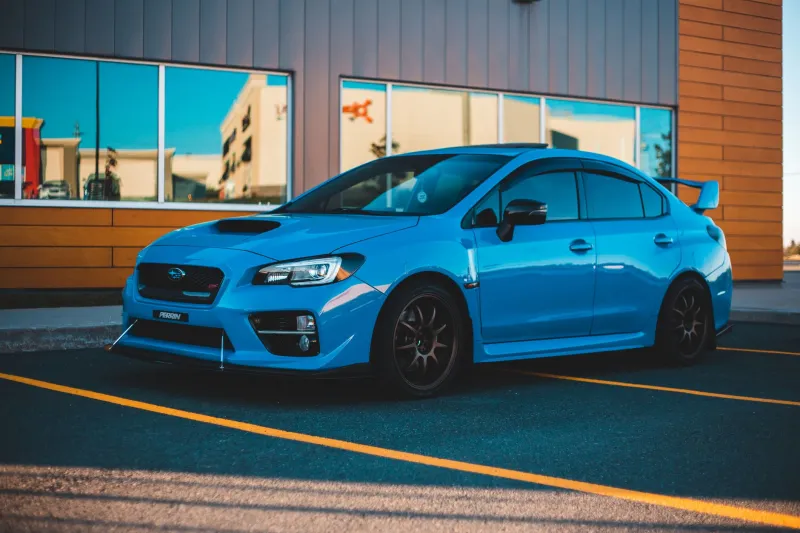
There's something deeply satisfying about pulling up to a light in a car that looks like it just rolled off a dealer lot, then walking away from something with twice the horsepower. The sleeper build is practically a religion in the American car scene — a quiet, understated middle finger to anyone who judges a book by its cover.
But here's the thing nobody talks about at the shop: stealth costs money. A lot of it. And if you're deep in a low-key build without running the real numbers, there's a solid chance you're paying a premium for the privilege of nobody noticing your work.
Let's break down exactly where that bill comes from.
The Fabrication Tax Is Real
When you bolt a cold air intake, a set of headers, and a tune onto a car that was designed to accept those modifications, the process is relatively straightforward. The parts were engineered to fit. The mounting points exist. The clearances were calculated by someone who got paid to think about them.
When you're building a sleeper, the whole game changes. You want that big-displacement engine swap hidden under a factory hood line. You want that intercooler tucked where nobody can see it from the outside. You want the exhaust to sound close enough to stock that your neighbors don't notice — but still flow well enough to support real power.
Every single one of those goals requires custom fabrication. Custom brackets. Custom routing. Custom heat shielding. And custom fabrication means shop hours, and shop hours in the US are running anywhere from $100 to $175 an hour in most metro markets. A clean hidden intercooler install that would've been a $400 bolt-on with a visible front-mount setup can easily turn into a $1,500 to $2,500 job once you account for the custom piping, the tucked routing, and the labor to make it look like nothing's there.
That's the fabrication tax. You pay it every single time subtlety is the goal.
Specialized Components Don't Come Cheap
Beyond fabrication, the parts themselves often carry a premium when they're designed to disappear. Low-profile intercoolers, compact turbo kits engineered for tight engine bays, and short-runner intake manifolds that fit under a stock airbox cover — these aren't the mass-produced, high-volume SKUs that benefit from economies of scale. They're niche products made for a niche application, and the pricing reflects that.
Compare a standard top-mount intercooler kit for a common turbocharged platform to a tucked, side-mount alternative designed to stay hidden behind the bumper fascia. The performance difference might be negligible or even favor the standard option, but the stealth version can run 30 to 60 percent more just for the packaging. You're paying for the engineering that went into making it invisible — not necessarily into making it faster.
The same logic applies to exhaust systems. A cat-back that sounds aggressive and performs well is a commodity. A system that flows like a performance exhaust but sounds subdued enough to pass for stock? That's a specialty item with a specialty price tag.
The Tune Gets More Complicated Too
A straightforward bolt-on build with well-documented parts on a popular platform is tuner-friendly. There's data. There are base maps. The tuner has probably seen your exact combination a dozen times and can work efficiently.
A sleeper build with an unusual parts combination — maybe a swapped engine, non-standard injectors, or a custom intake path — is a different conversation. Tuners charge for complexity, and rightfully so. What might be a $600 tune on a clean, conventional setup can escalate to $1,200 or more when the tuner is starting from scratch, chasing odd sensor readings caused by non-standard routing, or diagnosing idle issues that exist because your intake manifold is crammed into a space it wasn't designed for.
This isn't a knock on sleeper builds. It's just math.
Maintenance Becomes a Puzzle
Here's a cost that hits you not once, but every single time the car needs attention: access. When you've routed components through tight spaces to keep them hidden, routine maintenance turns into a disassembly project. Spark plug changes that should take an hour take three. Oil changes that require moving custom-fabricated brackets. Intercooler inspections that mean pulling half the front end.
Over the life of a build, this adds up in a serious way. Either you're spending extra shop time on every service interval, or you're doing the work yourself and burning a weekend on something that should've taken an afternoon. Neither option is free.
So Is the Sleeper Premium Worth It?
Honestly? That depends entirely on why you're building the car.
If the whole point is the reaction — the look on someone's face when they realize what just happened — then no dollar amount is really going to talk you out of it, nor should it. The sleeper build is a lifestyle choice as much as a performance one, and there's genuine craftsmanship in executing it well.
But if you're building primarily for performance, and the stealth aesthetic is a secondary goal, it's worth asking whether the extra spend is delivering extra performance — or just extra invisibility. In a lot of cases, a more conventional build with the same budget will put down more power, be easier to maintain, and cost less to tune correctly.
The bragging rights of subtlety are real. So is the bill that comes with them.
Building Smart Within the Stealth Framework
If you're committed to the sleeper route, there are ways to keep the costs from spiraling.
First, prioritize platforms with existing aftermarket support for hidden builds. Some cars — think first-gen Dodge Chargers, late-model Impalas, or certain Volvo wagons — have dedicated communities that have already solved the fabrication puzzles. Buying into that existing knowledge base saves you from paying a fabricator to figure it out from scratch.
Second, be honest about which elements actually need to be hidden versus which ones you're hiding out of habit. Maybe the intercooler stays tucked, but the intake doesn't need to be invisible because nobody opens your hood anyway. Pick your battles and spend accordingly.
Third, find a tuner who has experience with unconventional builds before you start wrenching. Getting their input early can save you from parts choices that create expensive headaches down the road.
The sleeper is one of the coolest things you can build. Just go in with your eyes open about what that cool is going to cost you.