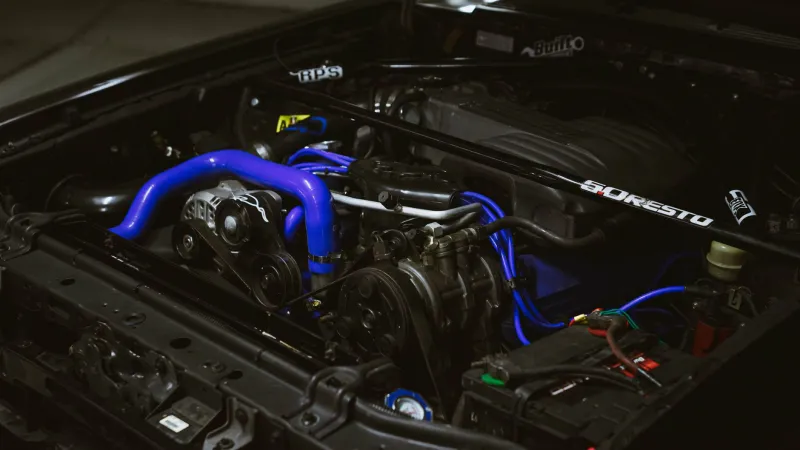
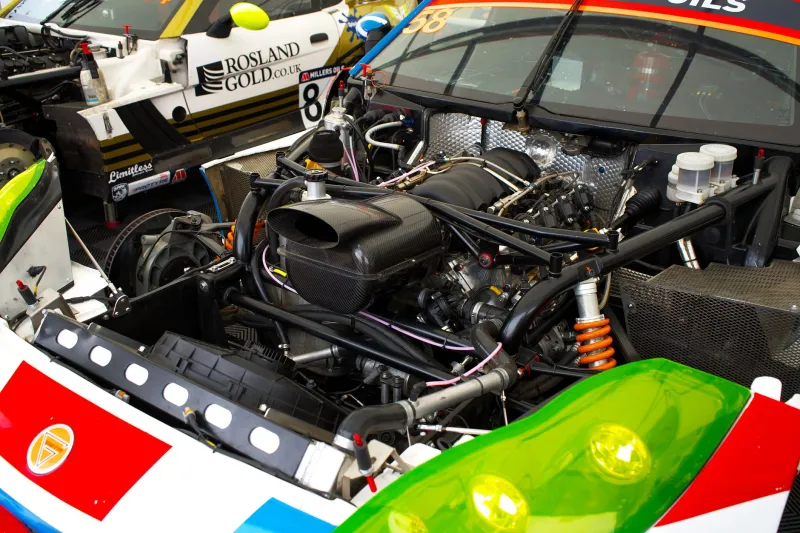
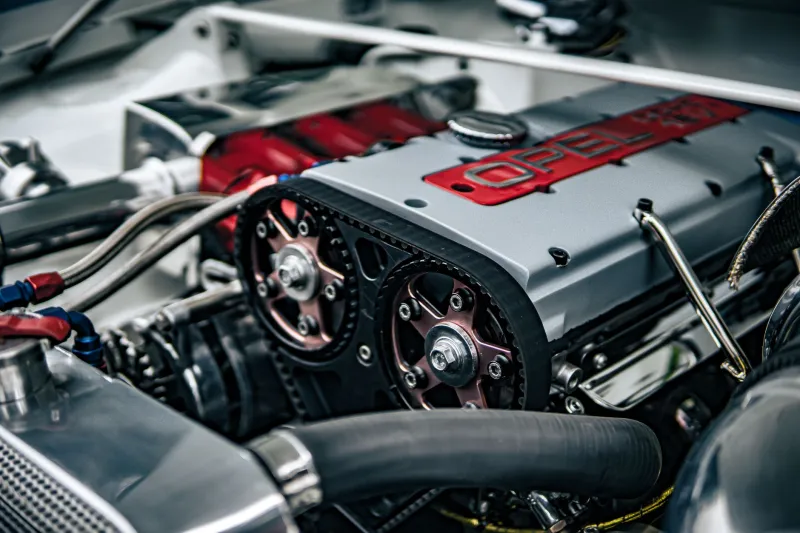
Choked Out: How Your Manifold Design Is Quietly Capping Every Gain You've Made
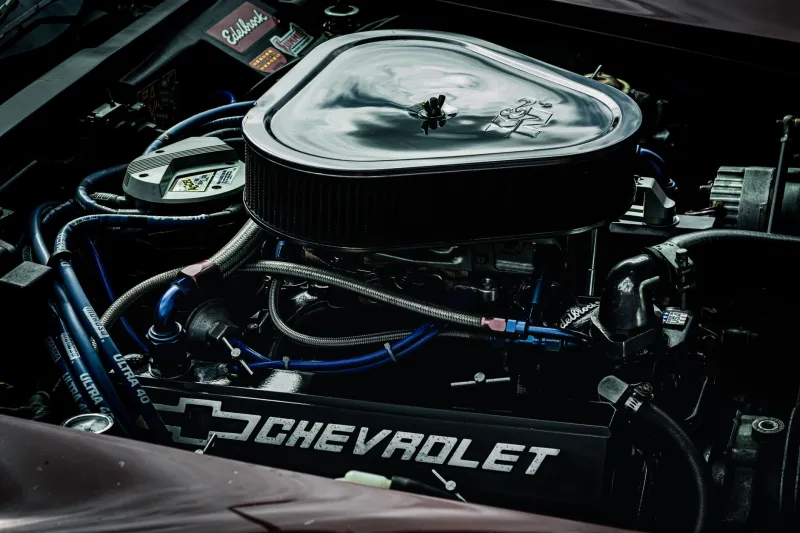
Here's a scenario that plays out in garages across the country more often than anyone wants to admit: you spend serious money on a build, stack up the mods, get a tune, hit the dyno — and the numbers are just... fine. Not bad. Not what you paid for, either. The car runs, it pulls, but that ceiling you were hoping to blow through? Still there. Still solid.
Nine times out of ten, nobody immediately points to the manifold. They'll look at the tune first, question the injectors, wonder if the exhaust is flowing right. The manifold sits there, bolted up and ignored, doing its quiet damage to everything connected to it.
Let's fix that.
What a Manifold Is Actually Supposed to Do
At its most basic, an intake manifold moves air from your throttle body into the combustion chamber. An exhaust manifold does the opposite — it collects spent gases from each cylinder and funnels them out toward the rest of your exhaust system. Simple concept. But the execution of that job is where everything gets complicated.
The shape, length, diameter, and internal surface finish of your manifold runners all directly influence how air moves through them. This isn't just about volume — it's about velocity, timing, and what engineers call "scavenging." When exhaust pulses leave a cylinder, they create a low-pressure wave that, if your manifold is designed correctly, actually helps pull the next intake charge in. That's free performance. That's physics working for you.
When your manifold is designed poorly — or more accurately, designed for cost-efficiency rather than performance — those pressure waves work against each other. You lose cylinder fill efficiency. You lose scavenging. You lose power you were never even measuring because you never had it to begin with.
The OEM Compromise Every Builder Has to Reckon With
Factory manifolds are engineered to hit a sweet spot across a wide RPM range, across varying temperatures, across emissions requirements, and — let's be honest — across a budget. They're not bad pieces of engineering. For what they're designed to do, they're actually pretty impressive.
But the moment you start pushing more air through the system — bigger turbo, cams, ported head, aggressive tune — the factory manifold becomes a constraint rather than a neutral component. It was never sized for the airflow you're now demanding. The runners that were perfectly adequate at stock power levels become bottlenecks the second you ask them to flow significantly more.
This is especially visible on turbocharged builds. The exhaust manifold on a factory turbo car is designed to spool the OEM turbo efficiently at stock boost levels. Swap in a larger turbo and suddenly that same manifold is creating backpressure where you don't want it, disrupting exhaust pulse timing, and making your new turbo work harder than it should just to spool up. You're fighting your own hardware.
Runner Length: The Variable Everyone Forgets
Here's where it gets interesting from an engineering standpoint. Intake runner length isn't just a packaging consideration — it's a tuning parameter. Longer runners tend to build torque lower in the RPM range because they take advantage of intake charge momentum at lower velocities. Shorter runners favor top-end power because they flow better at high RPM where that momentum effect diminishes.
Variable intake manifolds — the kind you'll find on a lot of modern engines — actually change runner length mechanically to try and capture both. But when you're building a car with a specific power band in mind, fixed-runner aftermarket manifolds let you optimize for exactly where you want to make power. A dedicated track build that's always running at high RPM wants short runners. A street car that needs to be drivable in traffic wants something longer.
Running the wrong runner length for your intended use case is one of the most common and most overlooked ways builders leave power on the table. And it's not something a tune can fully correct — geometry is geometry.
Real Builds, Real Ceilings
Take a mid-2000s Mitsubishi Evo or a WRX — platforms that have been squeezed for power by thousands of builders over the years. On both cars, the factory exhaust manifolds are known chokepoints at higher power levels. Builders pushing past 400whp on those platforms almost universally move to aftermarket equal-length manifolds not because they're trendy, but because the data consistently shows gains that a tune alone can't replicate. Spool time drops, mid-range torque improves, and the turbo operates in a more efficient part of its map.
Same story on the LS swap crowd. A stock LS truck intake manifold works fine up to a point, but anyone building a serious naturally aspirated or boosted LS knows that swapping to a performance manifold — whether it's a LS3 unit on an LS1 or a full aftermarket piece — is one of the highest-ROI moves you can make before a cam swap or heads.
The manifold is often the last upgrade people spec out and the first one they should have planned for.
When It's Overkill (And When It's Not)
Not every build needs a custom manifold. Let's be straight about that. If you're running a lightly modded daily driver with a cold air intake, a tune, and maybe a catback exhaust, your factory manifold is probably not your problem. The gains from upgrading it at that power level won't justify the cost or the installation complexity.
The math changes fast once you're serious about power. General rule of thumb: if you've already optimized your fuel system, upgraded your turbo or heads, and you're sitting on a tune that's hitting the limits of what the current airflow will support — the manifold conversation needs to happen. You're not going to tune your way past a physical restriction.
For naturally aspirated builds chasing peak power, ported and matched manifolds (even OEM units that have been cleaned up by a machine shop) can be a cost-effective middle ground. For forced induction builds looking for consistent gains across the power band, a purpose-built aftermarket manifold is often the cleaner long-term investment.
What to Look for When You're Shopping
Not all aftermarket manifolds are created equal. A few things worth paying attention to:
- Equal-length primaries on exhaust manifolds — this is critical for turbocharged applications. Unequal lengths mean unequal pulse timing, which translates to inconsistent spool and power delivery.
- Port matching — the manifold ports should match your head ports as closely as possible. Mismatches create turbulence right at the entry point, which is exactly where you don't want it.
- Material matters — cast iron holds heat better (sometimes desirable for keeping exhaust gases moving fast), while stainless and tubular steel manifolds are lighter and often flow better. Neither is universally right.
- Plenum volume — for intake manifolds, a larger plenum generally supports higher peak power but can hurt low-end response. Size it for your engine displacement and intended RPM range.
Stop Modding Around the Problem
The aftermarket world is full of parts that promise to unlock power, and most of them deliver — when the foundation is right. But if your manifold is restricting airflow, you're essentially trying to fill a bathtub with the drain open. Every downstream upgrade you make is working against a structural limitation that doesn't go away just because you ignore it.
Do the homework. Map your build's actual airflow requirements. Talk to a tuner who can look at your data logs and tell you where the restrictions actually live. And when the manifold shows up as the answer — which it will more often than you'd expect — take it seriously.
The gains are real. The ceiling is removable. You just have to be willing to look at the part nobody's posting about on the forums.