Strip It or Keep It: The Weight Reduction Debate Every Daily Driver Owner Has to Have With Themselves
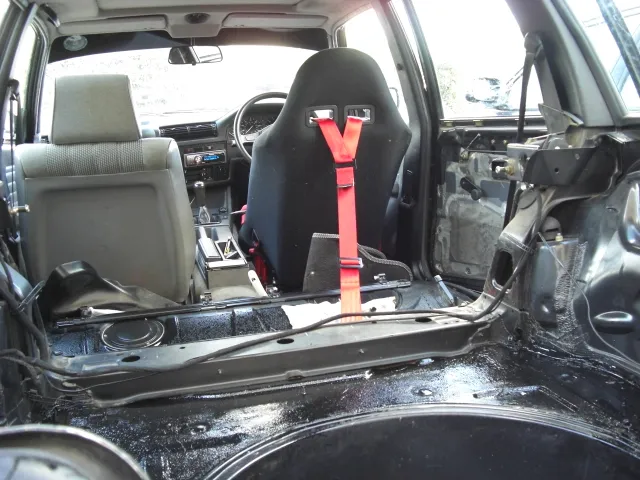
Photo: Drew e30, CC BY-SA 3.0, via Wikimedia Commons
There's a particular kind of internet bravado that shows up in every enthusiast forum, every build thread, every comment section under a weight reduction video. It goes something like this: real performance cars are stripped. If you've still got your rear seat in, you're not serious. Sound deadening is for people who don't want to go fast.
And look — there's a kernel of truth buried in there. Weight is the enemy of acceleration, braking, and lateral grip. Physics doesn't care about your feelings. But here's what the stripping evangelists don't talk about: context matters enormously, the gains are often smaller than advertised, and your tolerance for discomfort is not a measure of your commitment to the build.
This is the conversation every modified car owner eventually has to have with themselves, and it's a lot more complicated than "lighter is better."
The Math Is Real, But So Is the Law of Diminishing Returns
Let's start with what's actually true. Reducing weight genuinely improves performance across almost every measurable metric. Less mass means faster acceleration, shorter stopping distances, less load on your suspension, and better cornering capability. A 200-pound reduction in a 3,000-pound car is roughly a 6.5% decrease in mass — and that shows up in real performance gains, not just on paper.
But here's where the conversation gets more honest: the interior of your average daily driver doesn't have 200 pounds of easy-to-remove weight just sitting there waiting to be liberated. You're looking at maybe 25 to 30 pounds for a rear seat. Another 15 to 20 for a factory spare tire and jack. Sound deadening removal can net you 30 to 50 pounds depending on the car, but it's labor-intensive and messy. Your factory stereo head unit and speakers might give you 10 pounds if you're lucky.
Add it all up and a realistic interior strip on a daily driver might get you 80 to 100 pounds — meaningful, but not transformative. And every single one of those pounds comes with a trade-off you'll live with every time you get in the car.
The Sound Deadening Question
This one comes up constantly, and it's genuinely a tough call. Factory sound deadening — that heavy tar-like material stuck to your floor pans, firewall, and doors — is one of the more accessible weight reduction targets on most cars. It's also one of the most quality-of-life-destroying things you can remove if you spend any real time on public roads.
Here's the real talk: a stripped interior in a turbocharged car at highway speeds is loud. Not "cool sports car rumble" loud. More like "I can't hear my passenger and my ears are ringing after an hour" loud. Road noise, tire noise, exhaust resonance — all of it comes flooding in when that deadening is gone. If your car lives on a track or at autocross events, that's a reasonable trade. If you're commuting on the interstate three days a week, you're going to hate your life by February.
The middle ground that actually makes sense for most people? Remove the heaviest, least effective deadening — typically the thick peel-and-stick stuff under the carpet — and replace it with a thin, lightweight acoustic mat if noise is a concern. You lose less weight than a full strip, but you keep your sanity on road trips. That's not a compromise. That's a practical decision.
The Rear Seat Situation
Pulling the rear seat is a classic move and one of the easier DIY weight reductions on most platforms. Depending on the car, you're looking at 25 to 45 pounds and maybe 45 minutes of work. For a dedicated track car or a weekend canyon runner that never carries passengers, it's a no-brainer.
But if you've got kids, or a dog, or a partner who occasionally wants to ride somewhere with you, or friends who might want to experience the car you've spent years building — that rear seat is doing something important. And once it's out and you've filled the space with a half cage or a battery tray or a fire extinguisher mount, it's not exactly easy to put back.
The question isn't whether removing the seat makes the car faster. It does, marginally. The question is whether 35 pounds is worth permanently changing how you use the car. For some people, absolutely yes. For others, that's a trade they'll regret in month two.
Where Weight Reduction Actually Pays Off
Here's the thing the all-or-nothing crowd misses: not all weight is equal. Unsprung weight — the mass of your wheels, tires, brakes, and suspension components that sits below your springs — affects handling more dramatically than the same amount of weight inside the cabin. Swapping to lighter wheels is almost always a better performance investment than ripping out your headliner.
Same goes for rotational mass. Lighter rotors, a lighter flywheel, a lighter driveshaft — these components have an outsized impact on how the car feels because the engine has to spin them up and slow them down constantly. A 10-pound reduction in rotational mass often feels more significant than a 30-pound reduction in static cabin weight.
If you're serious about weight reduction, start there. Then work your way to the easy interior wins — spare tire, factory jack, maybe the rear seat if your use case supports it. Approach sound deadening removal honestly and with eyes open about what you're trading.
Give Yourself Permission to Be Practical
The modified car community has a weird habit of treating comfort as weakness. If you kept your air conditioning, you're soft. If you've got door panels, you're not committed. It's a mentality that makes for great forum posts and miserable ownership experiences.
Your build should serve your actual life. If that means a stripped-out, no-frills track weapon that's genuinely uncomfortable everywhere except a circuit, awesome — build that car. But if you're driving to work, running errands, and occasionally taking road trips in the same car you autocross on weekends, there's nothing wrong with making choices that keep it livable.
Lighter is often better. But comfortable enough to actually enjoy driving is always better than a car you dread getting into. Keep that in mind before you start peeling carpet.